

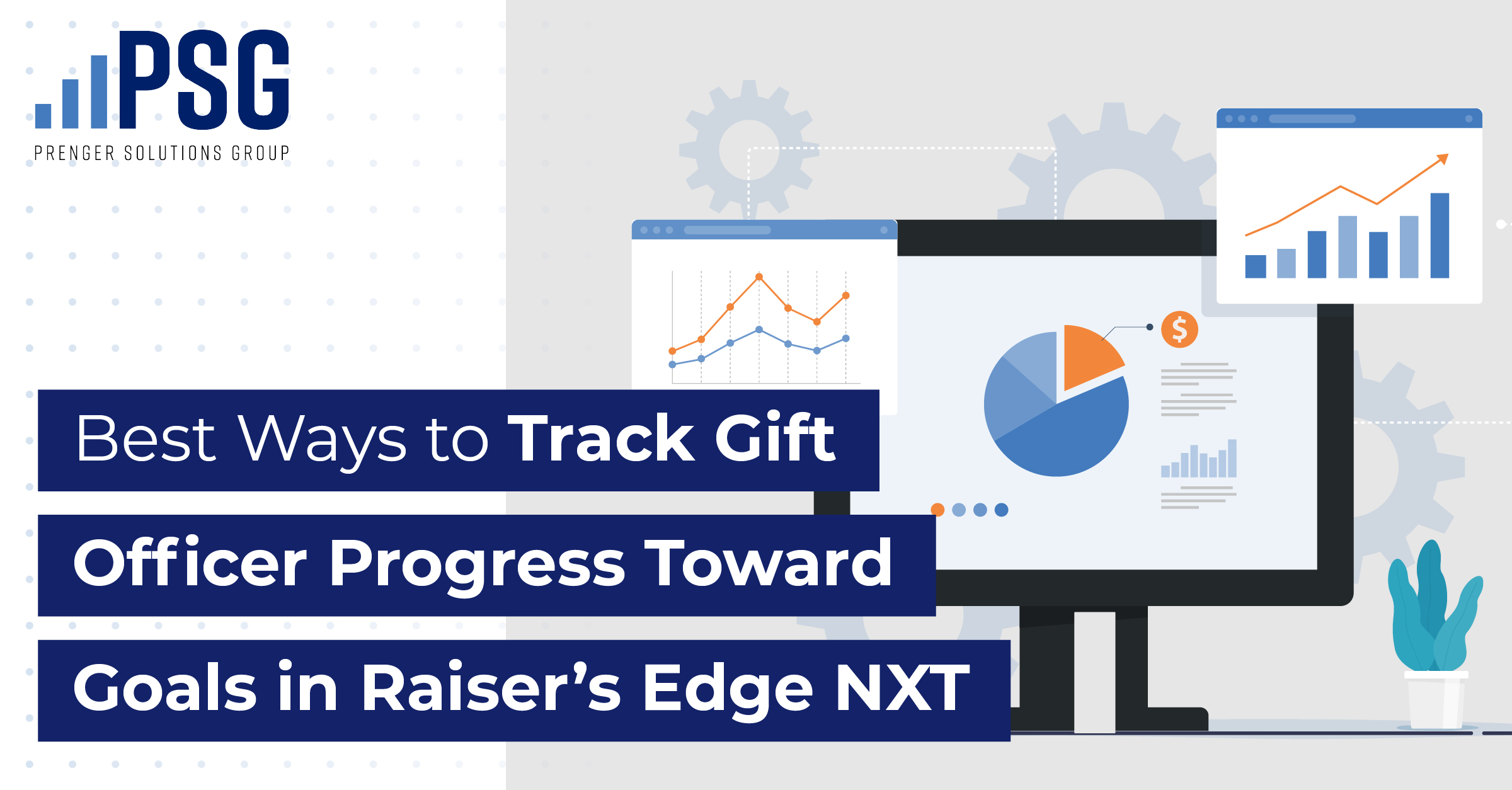
“How are our gift officers doing?” should not require six spreadsheets, three meetings and a panicked Slack message.
There comes a point in every fundraising office where someone asks a very reasonable question: “How close are we?”
And suddenly, gift officers everywhere begin opening Excel files with names like:
- FINAL_Portfolio_Tracker_v2_REAL.xlsx
- Gifts_THIS_ONE_USE.xlsx
- Opportunities_UPDATED_USE_THIS.xlsx
Sound familiar?
The good news is that Blackbaud Raiser’s Edge NXT already includes powerful tools to track fundraiser performance, pipeline movement, donor engagement, and overall portfolio health. The challenge is not whether the data exists. It’s knowing where to look and what actually matters.
Let’s walk through the best ways to track gift officer progress in Raiser’s Edge NXT without drowning in reports nobody reads.
Why does tracking gift officer progress matter?
Tracking fundraiser performance is not about micromanaging your team. It is about answering questions like:
- Are portfolios actually moving?
- Are we engaging with donors consistently?
- Are opportunities advancing?
- Are proposals turning into gifts?
- Are we pacing toward goal before the December panic begins?
Strong tracking also helps leadership identify coaching opportunities, rebalance portfolios and spot fundraising trends earlier. Most importantly, it creates accountability without relying on “gut feeling.”
What is the best way to track fundraiser progress in RE NXT?
Start with the built-in dashboards inside the web view. The most valuable tools are typically:
- Fundraising Dashboards
- Opportunities Dashboard
- Work Center
- Lists
- Standard Reports
- Portfolio metrics
- Fund goals tracking
Together, these provide both the high-level overview leadership wants and the day-to-day activity tracking gift officers need. The key is using them together instead of relying on a single report.
Which dashboard should fundraisers use daily?
The Fundraising Work Center is usually the best starting point. Inside the Work Center, gift officers can quickly review:
- Assigned constituents
- Active opportunities
- Upcoming actions
- Recent gifts
- Portfolio movement
- Relationship assignments
This effectively becomes a personalized fundraising command center. Instead of hopping between queries and reports, fundraisers can manage much of their portfolio activity in one place.
How do you track progress toward fundraising goals?
The Fundraiser Dashboard inside Analysis is one of the easiest ways to monitor performance against goals. It allows organizations to:
- Filter by assigned fundraiser
- Compare raised dollars against goals
- Review progress over specific date ranges
- Monitor giving activity in real time
This is especially useful during campaign pushes, fiscal year-end or major appeal seasons.
Another highly useful tool is Progress to Fund Goals, which tracks how much revenue has been received toward specific fund goals. Instead of manually calculating progress, RE NXT visualizes goal tracking directly within the platform.
What metrics should organizations actually track?
This is where many organizations overcomplicate things.
You do not need 47 KPIs to determine whether a portfolio is healthy.
Focus on a handful of metrics that actually indicate fundraiser movement and donor engagement.
Recommended Gift Officer Metrics
1. Year-over-Year Giving Growth
Is the fundraiser’s portfolio growing compared to previous years? This helps measure relationship effectiveness over time instead of only focusing on one-time large gifts.
2. Proposal Success Ratio
Compare: Total amount asked vs. Total amount funded
A healthy pipeline is not just about activity. It is about movement toward closed gifts.
3. Meaningful Actions Logged
Track completed:
- Meetings
- Calls
- Visits
- Stewardship touchpoints
- Personalized outreach
If actions are not being logged consistently, portfolio visibility becomes nearly impossible. And “thinking about calling the donor” does not count as a completed action.
4. Portfolio Health
Look at how prospects are distributed across stages like:
- Qualification
- Cultivation
- Solicitation
- Stewardship
If every prospect is sitting in cultivation forever, your pipeline may be stuck. A healthy portfolio should show movement.
5. Opportunity Pipeline Value
Track:
- Asked amounts
- Expected amounts
- Funded opportunities
- Stalled proposals
This gives leadership visibility into future revenue instead of only historical revenue.
What reports are most useful for leadership?
Leadership teams usually want concise, actionable reporting.
A few particularly helpful reports include:
Constituent Giving Summary
Useful for analyzing:
- Total giving
- Average gifts
- Last gift dates
- Portfolio giving trends
Pledge and Recurring Gift Reports
Helpful for monitoring:
- Retention
- Fulfillment
- Stewardship success
- Sustainer health
These reports are especially valuable when evaluating whether gift officers are maintaining relationships after gifts are secured.
Should organizations use Lists or Reports?
Honestly? Both.
Reports provide structured summaries.
Lists provide flexibility. Lists are especially useful when gift officers need to:
- Track overdue actions
- Identify stalled opportunities
- Monitor qualification timelines
- Segment portfolios
- Identify unengaged donors
A well-built list often becomes the operational backbone of a fundraiser’s weekly workflow.
How often should fundraiser performance be reviewed?
Most organizations benefit from:
- Weekly reviews help keep portfolios moving.
- Quarterly reviews help leadership identify broader trends and coaching opportunities.
- Annual reviews alone are usually too late to fix pipeline problems.
What are common mistakes organizations make?
Mistake #1: Tracking dollars only
Revenue matters, but activity and pipeline health matter too. If you only measure closed gifts, you miss the leading indicators that predict future fundraising success.
Mistake #2: Overcomplicated reporting
If your dashboard requires a 30-minute explanation every time someone opens it, simplify it. The best dashboards are easy to interpret quickly.
Mistake #3: Inconsistent action logging
No actions = no visibility.
Gift officers need consistent habits around entering actions, updating opportunities, and documenting donor movement. Otherwise, leadership ends up trying to manage portfolios blindfolded.
Mistake #4: Ignoring portfolio movement
A portfolio packed with stagnant prospects is a warning sign. Movement matters!
- Qualification should lead to cultivation.
- Cultivation should lead to solicitation.
- Solicitation should eventually lead to stewardship.
If nothing moves, fundraising momentum slows down fast.
Is Blackbaud Fundraiser Performance Management worth it?
For larger advancement shops or highly data-driven teams, Blackbaud Fundraiser Performance Management can add another layer of visibility.
It integrates with RE NXT and provides deeper analytics around:
- Fundraiser activity trends
- Portfolio performance
- Pipeline forecasting
- Goal pacing
- Predictive insights
Organizations with multiple frontline fundraisers often find this especially useful for benchmarking and coaching. That said, many organizations can dramatically improve visibility simply by using the standard RE NXT tools more consistently.
The best fundraiser tracking systems are not necessarily the most complex. They are the ones your team actually uses!
Raiser’s Edge NXT already provides strong tools for tracking:
- Fundraiser goals
- Opportunity pipelines
- Donor engagement
- Portfolio movement
- Giving growth
- Stewardship activity
The real win comes from building consistent habits around reviewing the data, logging actions, and keeping portfolios moving forward.
Because at the end of the day, fundraising success is not just about closing gifts. It is about building momentum before year-end dashboard panic sets in.
You May Also Be Interested In
Set up and get the most out of your security groups in RE
Watch Now