



Late in December 2025, one of our diocesan clients reached out with a concern that, unfortunately, is becoming more common.
A video was circulating online that appeared to show their bishop speaking directly to the faithful. The message felt pastoral. The voice sounded right. The setting looked believable. At first glance, it passed.
It was not real.
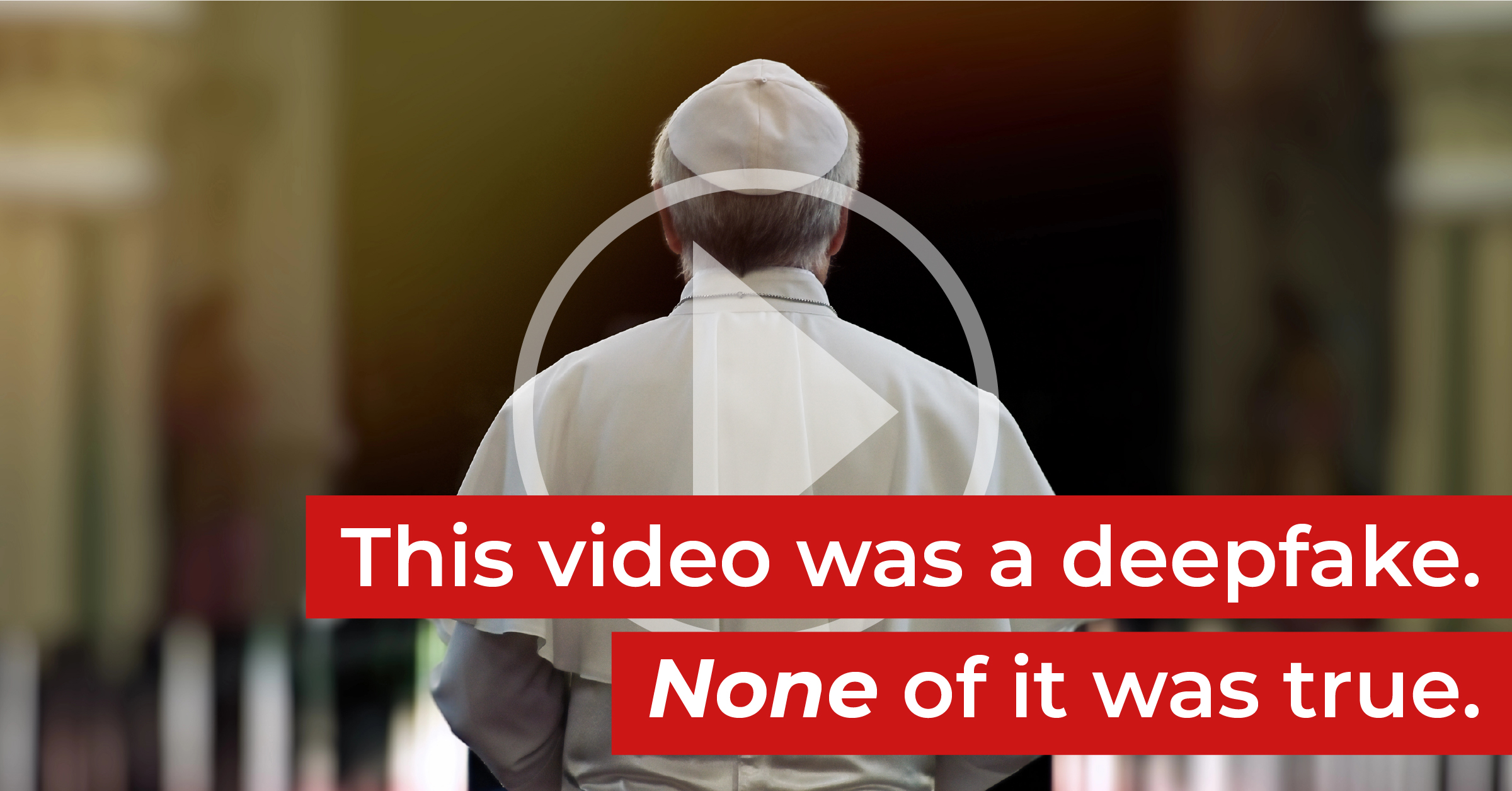
The video was a deepfake, an AI-generated imitation of the bishop’s voice and likeness, paired with a message urging viewers to send money so their prayer intentions could be carried to a shrine in France. The narration leaned heavily on urgency, invoking the close of the Jubilee year and suggesting that prayers would be answered more quickly if people acted now.
None of it was legitimate. And I’ll admit, it made me pretty angry. After all, no one deserves to have their likeness spoofed online, especially when it’s in serve of some kind of scammy message.
What Made This One Especially Concerning
We traced the source of the video, but like many operations of this kind, the trail was intentionally murky. Registration details were largely redacted, with website registrations pointing to multiple countries. That alone told me this was not a one-off prank or a local scam particular to this diocese.
It was coordinated. And it was designed to exploit trust. Consider this the next generation of a scam phone call – you know, the ones where someone claims to be from the Social Security Administration, and your account has been compromised.
The most troubling part is not the technology itself. AI tools are advancing rapidly, and that is not going to slow down. The real concern is how convincingly these tools can be used to impersonate trusted Church leaders and create confusion among the faithful, especially older parishioners who don’t have the critical eye of younger “digital natives.” It was also published right before Christmas, when the faithful are preparing for a high holy day, and most diocesan offices are urgently trying to finish projects before a much-needed end-of-year break.
A Strong Response Matters
The good news is that this diocese responded quickly and thoughtfully.
Their communications team took several important steps right away:
- They flagged the video as fake on Facebook
- They alerted the USCCB
- They sent a short, clear message to the entire diocese explaining that the video was not real
That kind of swift, coordinated response makes a real difference. It limits the spread, reduces confusion, and reassures people that the Church is paying attention.
Not an Isolated Incident
This is not about one diocese or one bad actor. Similar deepfakes circulated online throughout 2025, and we should expect more this year. Bishops, priests, and well-known Catholic voices are obvious targets precisely because people trust them.
If your diocese or parish does not already have a response plan for situations like this, now is the time!
That plan does not need to be complicated. It does need to answer a few basic questions:
- How we verify whether a message is authentic
- Who needs to be notified internally
- How we communicate clearly and calmly with our people
-
Which official channels will be used instead
Just as important, dioceses need reliable, established communications infrastructure through which people know they will find real messages from their shepherds. When official channels are clear and consistent, it becomes much easier for the faithful to spot something that does not belong.
A Final Word
Mitch and I are digging more into this topic, including what dioceses can do proactively to prepare. For now, consider this a reminder to stay alert, support your communications teams, and tread digital media as you would any other form of communications – with curiosity and a critical eye.
The technology may be new. The responsibility is not! But when we look at our committed communications ministers, we realize we DO have who we need to make sure the true Gospel is communicated. And that, as Gandalf would say, “…is an encouraging thought.”
Be careful out there, friends.
And remember, “Perhaps YOU were born for such at time as this.” – Esther 4:14
Deacon John Rogers
February 5, 2026